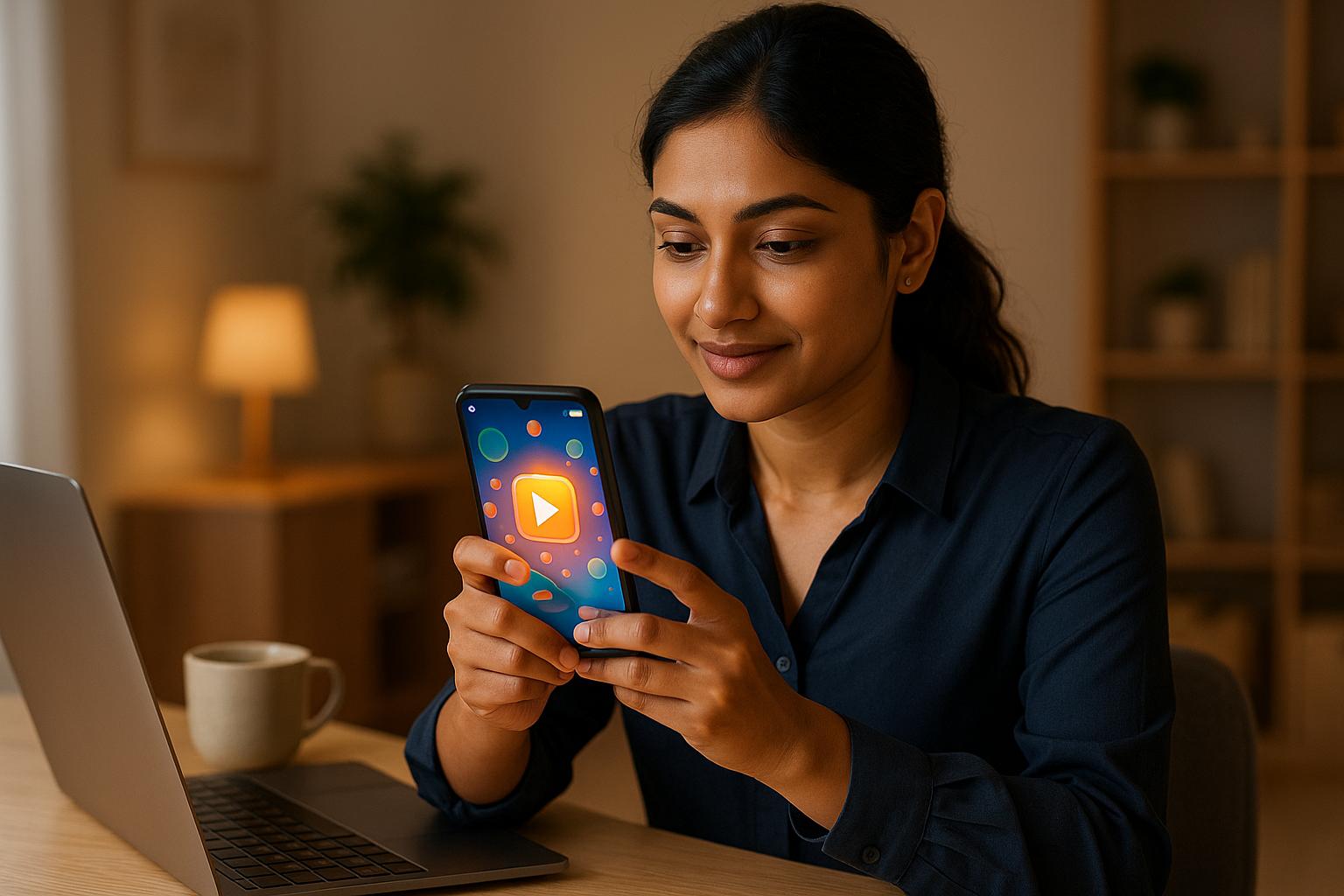
Playable ads are reshaping mobile app marketing by offering users an interactive "try-before-you-buy" experience. These ads let users engage with a mini version of an app or game, leading to better engagement, higher-quality users, and improved ROI for advertisers.
Key Takeaways:
- Higher Engagement & Retention: Users interact with ads for 47% longer and are 79% more likely to stay engaged.
- Better Conversions: Playable ads achieve up to 3x higher conversion rates and reduce acquisition costs by 40%.
- Cost Efficiency: They attract genuinely interested users, increasing lifetime value and reducing churn.
- AI Integration: AI tools optimize targeting, creative elements, and campaign performance in real time.
Playable ads outperform traditional formats like video or banner ads by delivering interactive experiences that pre-qualify users. They’re effective across platforms, from social media to in-app placements, and offer measurable results, such as improved click-through and return on ad spend (ROAS). For mobile advertisers, they’re a game-changer in driving user acquisition and retention.
The Power of Playable Ads: Current Trends & Best Mechanics with Gökçe Oguz from Playable Factory.
Key Benefits of Playable Ads for Mobile App Campaigns
Playable ads are changing the game for mobile app campaigns, offering measurable advantages. These interactive ad formats provide value to both advertisers and users by boosting engagement, reducing costs, and attracting higher-quality users.
Better User Engagement and Retention
The "try-before-you-buy" concept redefines how users interact with ads. Instead of passively watching, users actively engage with an app’s core features, which creates stronger connections and leads to impressive conversion rates.
Research highlights the success of interactive ads, with playable formats achieving conversion rates up to 700% higher than traditional ads and increasing user retention by 79%. Playable ads also generate valuable first-party data, offering insights into user behavior that can fine-tune targeting and creative strategies. This deeper engagement doesn’t just improve results – it also makes campaigns more cost-effective.
"Our players are willing to trade attention for rewards, preferring both rewarded video and our custom playables over other ad experiences." – Representative from Zynga
Cost Efficiency and ROI Improvement
Playable ads deliver better financial results by drawing in users who are genuinely interested in the app. Game developers have reported a 40% reduction in customer acquisition costs (CAC) and a 70% increase in day-seven return on ad spend (ROAS) when using playable ads.
These ads excel at pre-qualifying users. By letting people interact with the app’s key features before downloading, they attract users who are more likely to stay engaged post-installation. In 2024, playable ads generated 8 to 16 times more impressions-to-installs compared to non-playable formats. Moreover, users acquired through playables tend to have higher lifetime value, which improves monetization and reduces acquisition costs over time.
Targeting High-Value Users
Playable ads don’t just lower costs – they help attract users who are more likely to become loyal customers. Their interactive nature acts as a filter, weeding out low-interest users and ensuring only those with genuine interest proceed to install.
When paired with Lookalike Audiences, targeting becomes even more precise. Starting with a 1% Lookalike Audience ensures a close match, while expanding to 3–5% broadens reach for larger campaigns.
Keeping the ads short is critical. The sweet spot for playable ads is around 20 seconds, as shorter formats experience 30% less churn and achieve a 15% higher click-through rate than longer ones. Modern demand-side platforms also use predictive analytics to identify users with higher lifetime value potential, making campaigns even more effective.
How to Use Playable Ads in Cross-Channel Campaigns
Playable ads can be a game-changer when used across multiple channels, but success depends on a unified strategy and the right tools. These interactive ad formats can engage users on social media, websites, and in-app environments, ensuring your campaigns leave a lasting impression. Let’s break down how to integrate, align, and customize playable ads effectively.
Requirements for Integration
To make playable ads work seamlessly, you need to track key user actions like clicks, subscriptions, and purchases. This data is crucial for accurate cross-channel attribution. Platforms like Playable Factory simplify the process with tools such as Playable, Flex, Ready, Converter, and Insight. These tools streamline workflows and make it easier to manage and iterate on your ads. As Idan Tsahar, a Marketing Creative Director, explains:
"Playable Factory’s powerful tools provides me with the capability to control and iterate our playable ads in the most efficient, quick and intuitive way."
– Idan Tsahar, Marketing Creative Director
No-code tools like Flex are especially useful, allowing you to customize ads without any coding knowledge. Additionally, linking your analytics with sales and marketing tools, such as CRM systems, helps you connect user behavior directly to conversions.
Cross-Channel Alignment
Consistency is key when integrating playable ads across multiple platforms. Whether it’s social media, your website, or in-app placements, ensure your messaging and offers align across all touchpoints. A consistent experience not only builds trust but also helps you better understand the user journey when you include all platforms in your attribution model.
Customization for Maximum Impact
Customization is where playable ads truly shine. While templates can maintain your brand’s look and feel, tailoring interactive elements to suit your audience and campaign goals takes engagement to the next level. For example, GetirFinans collaborated with Tooplay to gamify fintech messaging, significantly increasing user interaction.
Testing is another critical step. A/B testing allows you to experiment with different elements – such as interactive features, tutorial lengths, or reward mechanisms – to see what resonates most with your audience. As Sevgi Çakıroğlu, a Senior Marketing Artist, shares:
"It is a great pleasure working with Playable Factory, their playable are 100% customizable, optimizable and includes technical support. Highly recommended."
– Sevgi Çakıroğlu, Senior Marketing Artist
Zynga’s partnership with Playable Factory is another success story. They created custom playable ads for their popular games, achieving impressive results. Similarly, in May 2025, a major airline teamed up with Tooplay and Playable Factory to design interactive ads showcasing its promotions and services effectively.
Data should guide your customization efforts. By analyzing user behavior and keeping up with shifts in industry trends, you can refine your ads and ensure they continue to perform across all channels.
sbb-itb-9ef3630
Measuring and Optimizing Playable Ad Performance
Creating effective playable ads isn’t just about the design – it’s about tracking the right metrics and constantly improving. By focusing on measurable outcomes and refining your approach based on data, you can ensure your ads deliver the best results possible.
Key Metrics for Success
To gauge the success of playable ads, you need to focus on metrics that directly affect your revenue. Return on Ad Spend (ROAS) is the gold standard, showing how much revenue you generate for every dollar spent. This metric is especially critical in the U.S., where mobile advertising costs are steadily increasing, making budget efficiency a top priority.
Other key metrics include:
- Click-Through Rate (CTR): Tracks how many users visit your app store after engaging with the ad.
- Conversion Rate (CVR): Measures whether the playable ad experience aligns with what users find in the app, ensuring a seamless transition.
- Engagement Rate (ER): Highlights how many users interact with the ad.
- Retention Rate: Reflects the quality of the ad and its ability to attract lasting users.
| Metric | Description |
|---|---|
| Engagement Rate (ER) | Percentage of users who interact with the ad |
| Click-Through Rate (CTR) | Users who visit the app store after engaging with the ad |
| Conversion Rate (CVR) | Tracks if the ad experience matches the app experience |
| Retention Rate | Indicates user retention based on ad quality |
| Return on Ad Spend (ROAS) | Compares revenue generated to campaign costs |
Playable ads also provide unique insights through metrics like time to engagement, which measures how quickly users start interacting, and game completion rate, which shows how engaging the ad is. Metrics like replay rate and first click rate can further highlight areas for improvement.
Analyzing User Interactions
The way users interact with your playable ad reveals much more than traditional metrics can. Their behavior provides valuable feedback on the experience, including game mechanics, visuals, and overall appeal.
For instance, shorter playables (around 20 seconds) reduce churn by 30% and achieve a 15% higher CTR compared to longer ones. This insight alone can significantly boost campaign performance.
Interactive elements are another goldmine for data. Interactive end cards, for example, generate nine times more engagement than static ones. Campaigns with enhanced end cards see up to 50% higher ROI and spend 20% less per install. These stats highlight the importance of optimizing every step of the playable ad journey.
Pay close attention to drop-off points within your ad. If users consistently abandon the experience at a specific point, it might signal an issue with the game’s mechanics, difficulty, or user interface. Identifying these problem areas allows you to fine-tune and improve the ad’s performance.
Testing and Optimization
Testing is the backbone of any successful ad campaign. A/B testing is essential for improving both CTR and ROAS. Instead of making random adjustments, focus on systematically testing elements that directly impact performance.
Key areas to test include:
- Level layout: Does the structure of the game keep users engaged?
- Color schemes and visuals: Are they eye-catching and appealing?
- Characters and rewards: Do they resonate with your audience?
- Redirection timing: Is the transition to the app store seamless?
Iterative A/B testing, paired with Dynamic Creative Optimization (DCO), helps identify the most effective combinations. For example, tweaking gameplay length, difficulty, or even the wording of your call-to-action (CTA) can make a big difference in user engagement.
Simplicity is key. Overly complex ads can confuse users and hurt performance. Instead, highlight the game’s best features and include meaningful interactions that encourage installs. A strong CTA can also work wonders – offering a bonus for installing the app can be particularly effective.
Emerging technologies like AI and machine learning (ML) are transforming how playable ads are optimized. These tools can analyze user behavior in real time and adjust creative elements on the fly, helping you find winning combinations faster than ever.
Optimization is an ongoing process. As user preferences shift and platform algorithms evolve, regular testing and fine-tuning are crucial to staying ahead of the curve.
Future Trends: AI and Automation in Playable Ads
Playable ads are quickly advancing, with AI and automation reshaping how they’re created, optimized, and scaled. These technologies bring new levels of personalization and efficiency to the table.
AI-Powered Automation
AI is revolutionizing every aspect of playable ad campaigns. The AI in Gaming Market is expected to hit $5.45 billion by 2031, growing at a rate of 20.3% annually. AI systems can now pinpoint and expand the reach of top-performing playable ad creatives using real-time A/B testing. A standout example is Dream Games‘ Royal Match, which leveraged AI-optimized playables to achieve over 12 million iOS downloads and generate more than $125 million. This contributed to a 56% revenue increase in 2024.
AI also simplifies the process of refreshing ad creatives to align with seasonal trends and local preferences. It automatically adjusts ads for different markets, ensuring relevance. Additionally, AI-powered targeting focuses on users’ in-game behavior rather than personal data, creating more accurate user profiles. On the budget side, AI-driven real-time bidding (RTB) dynamically allocates funds to the best-performing channels, maximizing the return on ad spend. These advancements are shaping the future of strategic advertising decisions.
Innovation Workshops
Strategic guidance is critical to fully harness these technological advances. Abhilash Krishnan’s innovation workshops help teams navigate the challenges of integrating AI into their workflows, ensuring campaigns achieve maximum impact. With nearly two decades of experience blending creativity with advanced tech, Krishnan provides actionable frameworks for implementing AI-driven creative automation and mobile-first AdTech strategies.
These workshops address practical challenges, such as incorporating AI tools into existing processes and developing creative approaches that balance automation with a human touch. They’re particularly valuable for agencies and brands launching AI-powered playable ad campaigns. Topics range from selecting the right technology stack to building systems for continuous improvement and experimentation. Krishnan’s approach demonstrates how strategic planning can turn AI capabilities into successful campaigns.
Preparing for the Future of Mobile Advertising
The next wave of mobile advertising innovation lies in immersive, AI-enhanced experiences. Playable ads are no longer limited to gaming; industries like retail, finance, and automotive are adopting interactive formats. Enhanced ad formats, such as those featuring 3D and motion elements, along with AI’s ability to generate multiple asset variations, are driving the shift toward more engaging experiences. Advertisers are now using AI to combine assets into customized, interactive content that moves beyond traditional video formats.
"As ad formats become richer and AI expands our ability to personalize and adapt creatives at scale, we’re able to unlock new insights into user behavior and motivation."
– Yann Zeller, Chief of Staff, Creative at Liftoff
Nike’s Never Done Evolving campaign in August 2022 showcased the potential of AI-powered creativity. The campaign used AI to recreate two versions of Serena Williams – one from her 1999 grand slam debut and another from her 2017 Australian Open victory. Broadcast live on YouTube, it became Nike’s most-viewed organic video at the time, simulating over 130,000 games and 5,000 matches between the two versions.
To stay competitive in this fast-changing landscape, marketing teams need to continuously learn and adapt. As AI capabilities grow, it’s essential to develop both technical expertise and strategic insight. By blending technological advancements with creative vision, interactive playables will continue to lead the way in mobile advertising.
Conclusion: The Case for Playable Ads in Mobile Campaigns
Playable ads present a strong opportunity for mobile app marketers in the United States, delivering results that are hard to ignore. Research indicates they are 32% more memorable compared to video or banner ads, making them a standout choice for grabbing attention and leaving a lasting impression.
The financial benefits are equally striking. For example, Bagelcode saw a 3.2x boost in ROAS on Android and a 1.4x increase on iOS, while Rovio achieved a 40% reduction in cost per paying user and a 70% lift in day-seven ROAS. These metrics highlight how playable ads can lower acquisition costs while improving user retention, creating a recipe for sustained growth.
What sets playable ads apart is their ability to "pre-qualify" users by offering a try-before-you-buy experience. This interactive format not only engages potential users but also ensures a consistent brand presence across platforms. The result? Highly engaged, valuable users and actionable data for refining campaigns .
As technology advances, the capabilities of playable ads continue to expand. With AI-driven tools reshaping creative and measurement methods, these ads are becoming even more effective. For U.S. mobile advertisers aiming to remain competitive, playable ads are quickly becoming an essential part of modern mobile marketing strategies. Their ability to deliver measurable ROI and cross-channel impact makes them a powerful tool in today’s advertising landscape.
FAQs
How do playable ads help boost user retention in mobile app campaigns?
Playable ads stand out by giving users interactive, hands-on experiences that keep them engaged. Instead of just watching a traditional ad, users get to try out an app or game before deciding to download it. This creates a stronger emotional connection and leaves a lasting first impression.
Because of this interaction, playable ads tend to attract engaged users who are genuinely interested in what the app offers. This often translates into better retention rates. By providing a fun and immersive preview, these ads build trust and encourage users to stick around, making them an effective strategy for mobile app campaigns.
How does AI improve playable ad campaigns and enhance their targeting and creativity?
AI takes playable ad campaigns to the next level by leveraging dynamic creative optimization. This technology allows ad designs to adjust in real time, ensuring they stay engaging, personalized, and focused on driving conversions. It’s like having a tool that fine-tunes your ads on the fly to connect better with your audience.
On top of that, AI sharpens targeting precision through predictive modeling. This means it can tweak audience targeting, bids, and creative elements in real time, keeping up with ever-changing market conditions and user behaviors.
By constantly analyzing data and refining strategies, AI doesn’t just make campaigns more efficient – it helps brands create experiences that feel tailored to individual users, ultimately driving better results.
How can marketers use playable ads to boost engagement and ROI in cross-channel campaigns?
Playable ads are an effective way to grab attention and encourage user interaction. To get the most out of them in cross-channel campaigns, focus on crafting interactive and engaging experiences that highlight your app’s standout features. Make sure these ads are tailored to different formats and orientations so they work smoothly across various platforms.
It’s also important to align your playable ads with your overall campaign strategy. This ensures consistency and reinforces your brand message. By using these ads across multiple channels – like social media and ad networks – you can create a unified experience that encourages user interaction and boosts your return on investment (ROI). Keeping creativity and user engagement at the forefront of your ad design can lead to stronger results for your campaigns.