
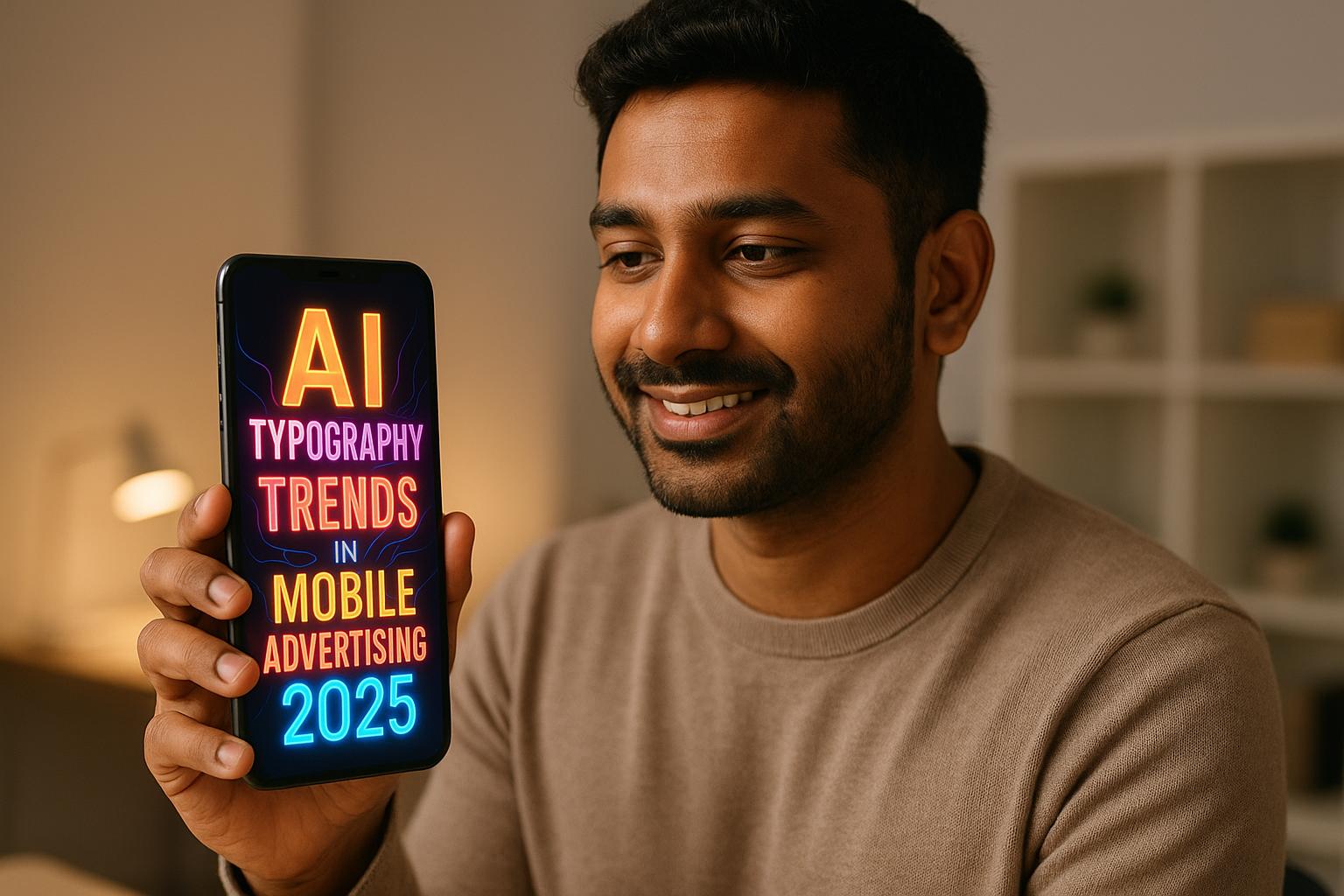
AI is reshaping typography in mobile ads, making text smarter and more responsive. Fonts now adjust in real time based on user behavior, device, and context, improving readability and engagement. Here’s what you need to know:
- Responsive Typography: Text dynamically adjusts for screen size, orientation, and user habits.
- Motion Typography: Animated text grabs attention while staying smooth on all devices.
- Variable Fonts: One font file offers multiple styles, ensuring consistency across platforms.
- AI-Generated Fonts: Custom typefaces are created faster, tailored to brand identity and audience needs.
- Accessibility: Text adjusts for readability, catering to users with visual impairments.
- Performance Data: Early studies show AI-driven text improves ad interaction rates.
This shift blends design with technology, making mobile ads more effective and user-focused.
How Can Subtle Color And Font Shifts Boost Social Media Ad Performance? – Graphic Design Nerd
Dynamic Typography Advances in 2025
Typography in mobile advertising is taking a leap forward in 2025, thanks to AI-driven systems that can adjust text on the fly. These advancements create a more responsive and engaging experience for users by tailoring text to their interactions and the context in which it’s viewed. From responsive designs to motion-based text and variable font solutions, AI is reshaping how mobile ads communicate visually.
Responsive Typography: Adapting in Real Time
AI-powered responsive typography takes user behavior and environmental factors into account to adjust text presentation in real time. Imagine this: a user rotates their phone, and instantly, the text adjusts its line spacing, kerning, and weight to remain easy to read. These systems can even monitor how users interact with content, learning their reading habits to fine-tune text settings for maximum clarity.
Another layer of this technology is device-specific optimization. By analyzing the unique characteristics of each device, such as screen size or resolution, AI ensures the typography remains sharp and legible, no matter where it’s viewed.
Motion Typography and Animation
Static text is becoming a thing of the past. Motion typography, or kinetic text, turns words into dynamic, moving elements that grab attention. Building on responsive features, these animations adapt in real time based on user engagement. For example, a headline might subtly animate to emphasize a key message, drawing the viewer’s focus exactly where it needs to be.
These animations are carefully balanced to ensure they enhance the message without overwhelming it. AI also takes into account the performance capabilities of the device, scaling animation complexity to provide a smooth experience, even on older or lower-powered devices.
Variable Fonts for Seamless Consistency
Variable fonts are another game-changer in mobile advertising. These fonts pack multiple styles into a single file, allowing AI to choose the best configuration for each screen size and resolution. This ensures that text looks polished and consistent across all platforms, while still adhering to brand guidelines.
By combining this flexibility with AI’s precision, advertisers can maintain a consistent visual identity across a wide range of devices and operating systems, ensuring their message always lands effectively.
These advancements in dynamic typography are making mobile advertising more personalized and adaptable than ever before, blending creative design with cutting-edge technology to deliver impactful and seamless experiences.
AI-Generated Fonts: Automation Meets Design
AI-generated fonts are changing the way custom typefaces are created, especially for brands looking to stand out in the crowded world of mobile advertising. This technology combines creativity with precision, enabling brands to craft typefaces that not only reflect their unique identity but also resonate with their audience.
By analyzing massive datasets of typefaces, AI tools can understand the structure of letterforms and create fonts tailored to specific brand personalities, demographics, and campaign goals. The result? Typography that feels fresh yet familiar – designed with mobile advertising in mind.
AI Font Creation Tools and Processes
AI-powered font creation tools use machine learning to analyze a brand’s visual identity and generate typefaces that align with its aesthetic. These platforms process existing brand assets – like logos and color schemes – to create fonts that maintain consistency while ensuring readability on mobile devices.
These systems also study patterns from successful mobile ad campaigns, identifying the typography features that drive engagement. Users can provide inputs like target audience, product type, and the emotional tone they want to convey, and the AI generates font variations optimized for those parameters.
The process doesn’t stop at creating a single font. AI tools can produce variations in weight, spacing, and character sets, ensuring the fonts are adaptable for different mobile screen sizes and formats. This streamlined approach eliminates the lengthy timelines typically associated with custom font development, allowing advertisers to quickly deploy unique typography for specific campaigns.
Machine learning further enhances these tools by refining font designs to better align with user behavior and regional preferences.
Machine Learning and Font Customization
Machine learning takes font customization to the next level by factoring in user behavior, demographic insights, and campaign performance metrics. It doesn’t just match a brand’s style – it creates fonts that are functional and engaging for specific audiences.
For example, fonts designed for younger audiences might include features that support quick readability, while fonts for older users could prioritize clarity with larger spacing and higher contrast. Emotional targeting is another exciting use case. Fonts can be designed to evoke specific feelings – rounded corners and consistent strokes might convey trust, while sharp, angular details could create a sense of urgency.
Cultural adaptation is also a key strength of AI in font design. By adjusting proportions, spacing, and stylistic elements, AI can create fonts that align with local reading habits and aesthetic preferences, ensuring they connect with diverse audiences across regions.
What makes this process even more powerful is its reliance on performance feedback. As campaigns run, AI analyzes engagement metrics to learn which typographic elements work best. This data is then used to refine future font designs, making them even more effective.
The integration of AI-generated fonts with real-time campaign optimization opens up new possibilities for mobile advertisers. Fonts are no longer static design elements – they can now adapt dynamically, just like other aspects of a campaign, to maximize impact and engagement.
sbb-itb-9ef3630
Personalization, Accessibility, and Performance Data
AI is now stepping up its game in typography, fine-tuning text to create more tailored user experiences. In mobile advertising, this means typography isn’t just about aesthetics anymore – it’s about making ads more engaging, inclusive, and user-centric. By adjusting text dynamically based on user behavior and design goals, AI-powered typography is helping brands connect with their audiences in smarter ways.
Custom Typography for User-Centered Campaigns
Modern AI solutions take dynamic text to the next level by customizing it in real time. These systems use user context – like preferences, device type, or even location – to tweak text attributes, ensuring messages are clearer and more relevant. The goal here is simple: deliver ad content that feels personal and resonates with a wide range of users, without losing the core message.
AI-Powered Accessibility Enhancements
Beyond personalization, AI-driven typography is making strides in accessibility. Adjustments like font size, spacing, and contrast are tailored to accommodate users with varying visual abilities, ensuring ads are readable for everyone. This approach not only broadens the audience but also reflects a commitment to inclusivity in advertising.
Performance Data: Traditional vs. AI-Enhanced Typography
Early findings suggest that campaigns using adaptive typography see better engagement and interaction rates. Viewers are more satisfied, and creative teams benefit from smoother workflows. While comprehensive, peer-reviewed data is still in development, the initial trends are clear: AI-driven typography is proving to be a valuable addition to mobile advertising strategies. These advancements hint at a future where AI doesn’t just enhance creativity but also provides deeper insights into how ads perform.
Future Trends and Expert Analysis
AI is shaking up the world of mobile ad typography. As we head further into 2025, a wave of fresh trends is transforming how brands design text for mobile campaigns.
New Typography Trends for 2025
Minimalist designs are taking center stage in mobile ad typography. Brands are moving away from cluttered layouts and embracing clean, intentional designs that make reading on small screens easier. The focus is on fewer words with maximum impact, while AI fine-tunes spacing and text hierarchy for clarity.
Bold, oversized typography is making a comeback, especially in video ads and interactive formats. This approach grabs attention instantly, with AI ensuring the text remains readable across different screen sizes.
Dynamic typefaces that adapt in real time are pushing boundaries. Powered by AI, these fonts can adjust elements like weight and spacing to better fit the context of an ad.
Emotion-responsive typography is breaking new ground. AI tweaks contrast and style based on user interactions, improving readability in various lighting and environmental conditions.
Micro-animations within letterforms are adding a subtle spark of interactivity. These small, animated effects within text catch the eye without being distracting, creating a more engaging experience for users.
These trends highlight the exciting intersection of design and technology, setting the stage for expert insights.
Abhilash Krishnan’s View on Connecting Design and Technology
Abhilash Krishnan, a seasoned Creative AdTech Strategist with nearly two decades of experience, emphasizes the importance of merging creative vision with technical precision in mobile advertising. He believes AI-driven typography works best when it not only supports creative goals but also improves the user experience.
Krishnan points out that AI can amplify human creativity by handling technical tasks like font optimization, spacing adjustments, and accessibility improvements. This allows designers to focus on storytelling and forging emotional connections with their audience.
He also stresses the need for mobile-first thinking. As AI typography tools grow more advanced, designing specifically for mobile – whether it’s perfecting text hierarchies for thumb navigation or catering to quick-scanning behaviors – ensures campaigns deliver real results.
FAQs
How does AI-powered typography improve user engagement in mobile advertising?
AI-driven typography takes user engagement to the next level by adjusting font styles, sizes, and contrasts in real time. These tweaks make ads easier to read and more visually appealing while ensuring the content connects with a wide range of viewers. The result? Ads that are not only accessible but also more effective in delivering their message.
On top of that, AI introduces dynamic text effects and interactive fonts that respond to user behavior. This creates a more immersive and tailored experience, grabbing attention and building a deeper emotional connection with the audience. The outcome is higher engagement and increased interaction rates, making your ads truly stand out.
What advantages do AI-generated fonts offer for mobile advertising compared to traditional font design?
AI-generated fonts offer some impressive benefits for mobile advertising. One standout advantage is their ability to maintain a consistent look across various devices and screen sizes. This consistency boosts readability and ensures a seamless experience for users – a crucial factor in today’s mobile-first landscape.
Another big plus is the speed and flexibility AI brings to font customization. Advertisers can quickly create typefaces that match their brand’s personality, saving time while adding a creative edge to their campaigns. By simplifying the design process, AI-generated fonts let marketers concentrate on crafting messages that resonate, all while keeping their designs visually engaging and efficient.
How does AI-driven typography improve accessibility in mobile advertising?
AI-powered typography tools are transforming mobile advertising by making it more accessible to everyone, including individuals with visual impairments. These tools automatically fine-tune essential design elements like font size, contrast, and spacing, ensuring text is easy to read across different devices.
Beyond adjustments, AI also spots potential accessibility challenges, such as low contrast or unsuitable font choices, and offers practical fixes to address them. By incorporating these improvements, brands can create mobile ads that are not only visually appealing but also inclusive, reaching a broader audience while adhering to user-friendly design principles.