

The music industry is being transformed by AI tools like Suno, Udio, and Riffusion, which make creating music faster and more accessible. These platforms allow users to generate songs, lyrics, and even cover art with minimal effort. Here’s a quick breakdown:
- Suno: Text-to-music generation, lyrics, and cover art creation. Ideal for full song production.
- Udio: A conversational tool ("ChatGPT for music") for beginners to create music easily.
- Riffusion: Focused on creative compositions, converting images and text into music.
Quick Comparison
| Feature | Suno | Udio | Riffusion |
|---|---|---|---|
| Input Method | Text prompts | Conversational | Text/Images |
| Key Strength | Full song creation | Beginner-friendly | Creative transformation |
| Output Format | Royalty-free tracks | Audio tracks | Custom compositions |
These AI platforms are not just tools for musicians but also for marketers and brands looking to create personalized audio experiences quickly and affordably. However, their rise also brings legal and ethical challenges, especially around copyright and fair use. The future of music lies in blending human creativity with AI capabilities.
Technical Basics of AI Music Platforms
How AI Creates Music
AI music platforms use advanced neural networks to turn simple prompts into complete musical pieces. By analyzing vast amounts of music data, these systems learn patterns in melody, harmony, rhythm, and structure. This allows them to create full songs in just seconds.
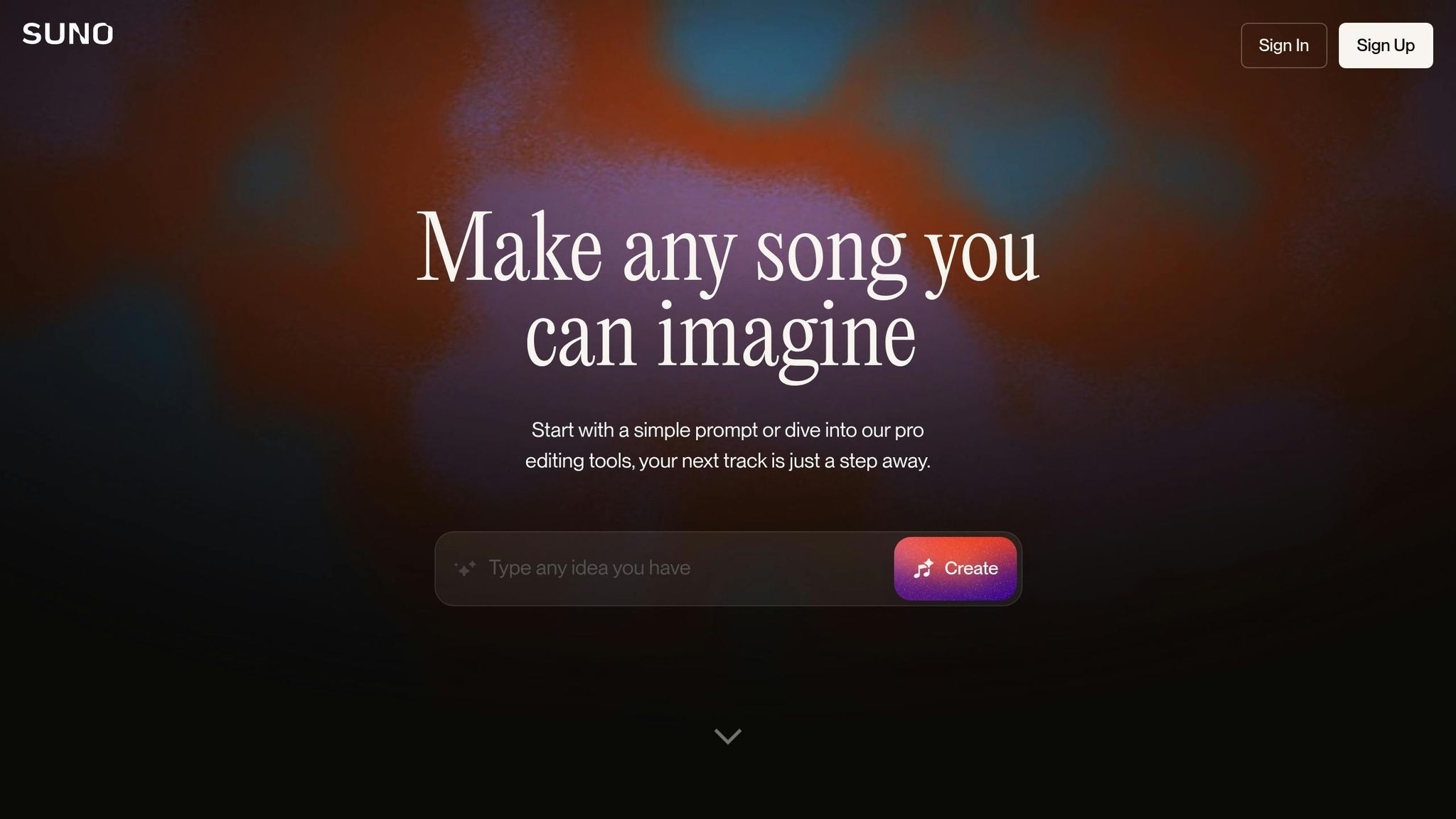
For example, Suno’s v3 model can generate radio-quality music and two-minute songs almost instantly. It also uses inaudible watermarking to identify if a song was made on their platform.
Main Functions of Each Platform
Different platforms offer distinct features:
Suno focuses on creating full songs with features like:
- Text-to-music conversion with adjustable settings
- Automatic generation of verses and choruses
- Options to tweak tempo, key, and instrumentation
- Cloud tools for team collaboration
Udio is designed as the "ChatGPT for music", offering:
- A conversational interface for music creation
- Simple controls ideal for beginners
Riffusion stands out with its creative tools, including:
- Converting images into music
- Controlling word durations for emphasis
- Turning written lyrics into full compositions
Here’s a quick comparison of their features:
| Feature | Suno | Udio | Riffusion |
|---|---|---|---|
| Primary Input Method | Text prompts | Conversational | Text/Images |
| Generation Speed | Seconds | Real-time | Variable |
| Key Strength | Full song creation | Beginner-friendly | Creative transformation |
| Output Format | Royalty-free tracks | Audio tracks | Custom compositions |
Each platform brings its own strengths to the table, offering tools to create high-quality music with ease.
Making Music Creation More Accessible
Tools for New Musicians
AI music platforms are changing the way beginners approach making music. Suno, for instance, offers a user-friendly interface that lets anyone create high-quality tracks without needing extensive musical knowledge or training. All it takes to get started is a simple description of the sound you want to produce.
"At Suno, we are building a future where anyone can make music." – Suno
Here’s what makes it easier for new musicians:
- Instant Song Generation: Create fully-formed, two-minute songs in a matter of moments.
- Customizable Parameters: Adjust tempo, key, and instrumentation with ease, no technical know-how required.
- Royalty-Free Output: The free version is accessible to all, while Pro and Premier accounts offer full copyright ownership.
Speed and Testing in Music Creation
These platforms do more than just simplify the process – they also make it much faster. Musicians can instantly test out different song variations, allowing for quicker experimentation and creative refinement.
Take a look at how AI tools compare to traditional methods:
| Aspect | Traditional Method | AI-Assisted Method |
|---|---|---|
| Song Creation | Hours to days | Seconds to minutes |
| Style Testing | Multiple recording sessions | Instant variations |
| Cost | Studio time and equipment | Subscription-based access |
| Collaboration | Physical presence needed | Cloud-based tools |
This speed not only makes the creative process more efficient but also shifts how music is made and shared.
Changes to Music Industry Jobs
AI’s ability to create content faster and more flexibly is also reshaping roles within the music industry. From stock music and sound design to lyric writing and songwriting, these platforms are influencing workflows and attracting major investments.
"I think one thing that we’ve been very deliberate here at the company is instilling a culture of real love of music. In that sense, you kind of have the morals and ethics around some of these issues kind of baked in to the DNA of the company, we have people who used to perform some poorly, some less poorly. So I think there is actually a fair amount of empathy for that problem. It’s funny, there’s a flip side, which is there is not as much empathy, for example, with someone who doesn’t know anything about music or doesn’t play music at the company." – Mikey Shulman
Rather than replacing human creativity, the focus seems to be on blending AI with human talent. This collaboration could open up new opportunities while redefining traditional roles.
AI Music Generation Comparison – Suno vs. Riffusion AI 🎵
sbb-itb-9ef3630
AI Music in Consumer Engagement
AI is changing the way music is created, and it’s also reshaping how brands engage with their audiences.
Using AI Music in Ads
AI-generated music is shaking up advertising by helping brands develop their own distinctive sound without the usual long production times or licensing headaches. With these tools, marketers can create custom soundtracks that not only complement visuals but also align perfectly with brand messaging. Traditional music production can take weeks – or even months – but AI tools allow for quicker turnaround and more options for customization. This speed makes it easier to test different musical styles through A/B testing, helping brands fine-tune their campaigns for better results.
Custom Music Experiences
Brands are tapping into AI music platforms to design personalized audio experiences that connect with their audience on a deeper level. These tools allow for dynamic soundscapes that can shift based on context or user behavior. As Christie C., an AI Art Creator and Educator, explains:
"This technology isn’t just groundbreaking; it’s a game-changer for creators, marketers, and entrepreneurs alike." – Christie C., AI Art Creator and Educator
Here are some ways brands are using AI music:
- Retail Spaces: Creating in-store soundscapes that change with the time of day or customer traffic.
- Mobile Apps: Adding custom soundtracks that enhance user engagement and reflect the app’s branding.
- Social Media: Crafting background tracks tailored to specific platforms and audience groups.
These tailored experiences are paving the way for a closer collaboration between human creativity and AI-driven tools.
Human-AI Music Collaboration
Combining AI-generated elements with traditional music production can result in richer, more engaging soundscapes. However, it’s essential for brands to set clear guidelines, track performance metrics, and maintain a human touch in the creative process. As Christie C. puts it:
"You’re not just making music; you’re creating experiences, memories, and even a bit of magic." – Christie C., AI Art Creator and Educator
What’s Next for AI Music
New Uses for AI Music
AI in music is evolving beyond just creating compositions. It’s now shaping soundscapes designed to support cognitive states, particularly in wellness and therapeutic settings. Around 620 million streamers worldwide are already using AI-powered tools for personalized music recommendations. This push for personalization is driving advancements in areas like:
- Interactive audiobooks: Dynamic soundtracks that shift with the story.
- Therapeutic music: Tailored tracks for relaxation or meditation.
- Fitness playlists: Soundtracks that adjust to your workout intensity.
- Educational tools: AI-generated music designed to aid focus and learning.
While these applications are exciting, they also bring up some tough legal and ethical questions.
Legal and Ethical Questions
As AI platforms grow, the music industry is grappling with legal hurdles. The Recording Industry Association of America (RIAA) has filed lawsuits demanding up to $150,000 in damages per infringed work, signaling the need for better protection and clear rules.
"Transparency is key to ensuring fair compensation for creators and preventing the unauthorized use of copyrighted works in AI-generated music."
Tech solutions are stepping in to help. For example, CoverNet has developed tools to detect AI-generated voice clones and track unauthorized use of copyrighted songs on streaming platforms.
Future Industry Changes
"One of the things that attracted us to machine learning tools and AI art was the ways in which it was failing, because these models aren’t perfect. They’re just guessing at what we want."
Here’s what’s likely ahead for AI music:
- Advanced source separation: Technology that isolates individual instruments with precision.
- Better control of algorithms: More refined tools for intentional and creative outputs.
- New licensing frameworks: Models that protect artists while accommodating AI-generated work.
- AI in music production: Seamless integration into traditional workflows.
AI’s outputs, ranging from flawed to groundbreaking, often spark fresh creative ideas. As the industry navigates these legal and ethical challenges, the focus is on finding a balance. The goal is to use AI to complement human creativity, enhancing artistic possibilities without losing the unique touch of human intuition in music.
Conclusion: The Impact of AI on Music
Main Points Review
AI music platforms like Suno, Udio, and Riffusion are changing how music is made and shared. Suno’s $125 million funding – the largest music tech investment in over three years – highlights this shift. These platforms are influencing the music industry in several ways:
- Opening Up Music Creation: Traditional barriers between creators and audiences are disappearing. Now, anyone, including marketers and content creators, can produce custom soundtracks without needing professional musical expertise.
- Changing the Industry: Personalized experiences matter – 80% of consumers are more likely to buy from brands offering them. Plus, 62% prefer the speed of AI-assisted services.
-
Supporting Creativity: AI isn’t replacing human creativity; it’s a tool to expand it. As Ahmed Elgammal, a Computer Science Professor at Rutgers University, puts it:
"When you use AI in the creative domain, it is just a tool…AI has the ability to surprise us, but the human artist is the one who put that into a human context".
Next Steps
AI’s influence on music offers exciting opportunities. Here’s how you can integrate it into your strategies:
- Discover New Revenue Options: Look into creating custom brand anthems, therapeutic music, or soundtracks for events. You could also provide AI-driven music services for podcasts and other projects.
-
Tackle Ethical Challenges: Be aware of copyright laws and fair compensation. As Sum Patten, Creative Director at Glow, says:
"Most musicians I know aren’t afraid of their art being replaced by AI. It’s pretty clear at this point that AI won’t be able to replicate the magic that a skilled and seasoned musician can accomplish".
- Integrate AI into Marketing: With chatbot use expected to hit $1.25 billion by 2025, combining AI-generated music with your campaigns can boost personalization and customer engagement.
The key is finding harmony between AI’s capabilities and human creativity, ensuring these tools enhance the music-making process without losing the human touch.