
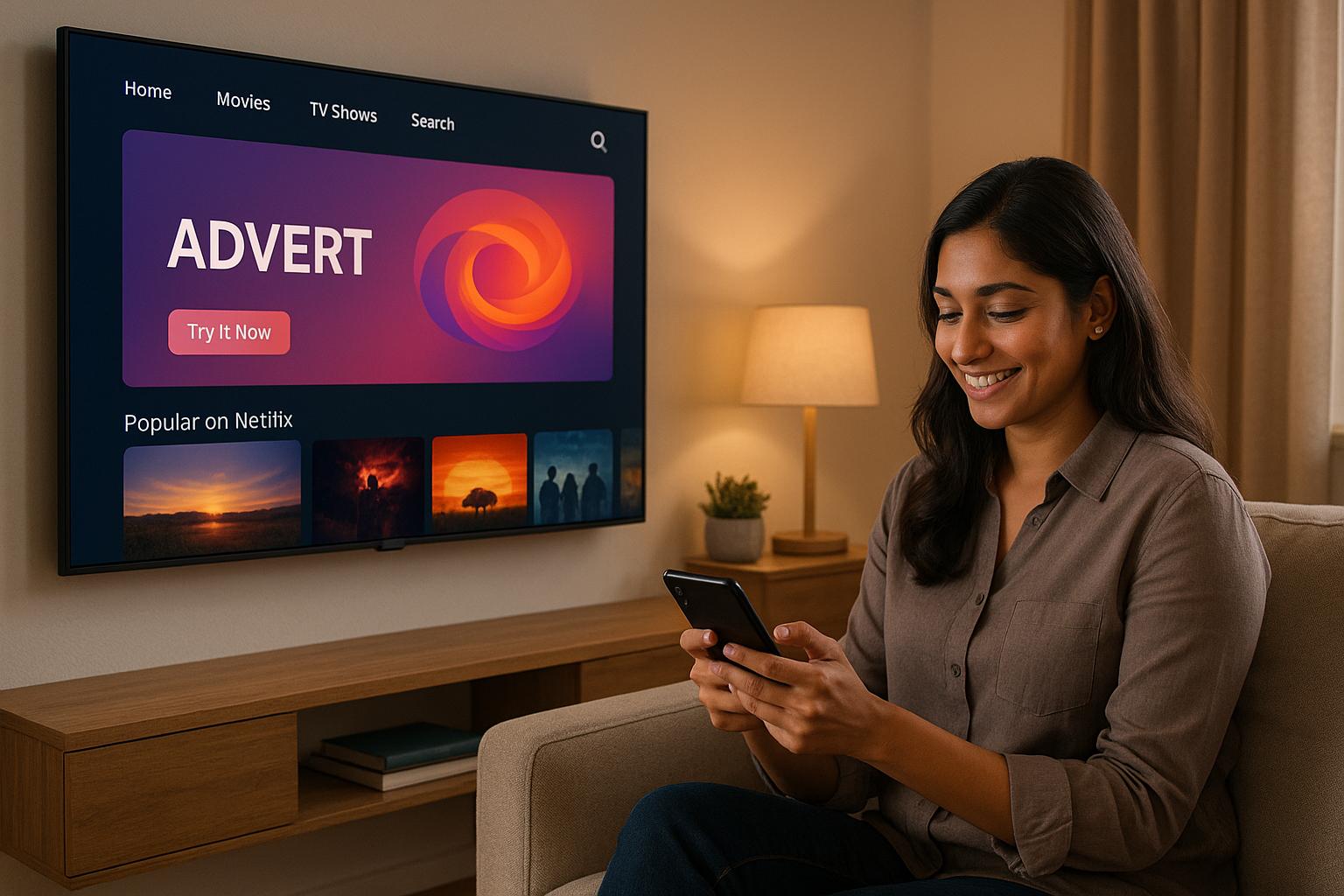
Netflix, YouTube, and Amazon are transforming how ads work on streaming platforms using AI. Here’s how each platform stands out:
- Netflix: Uses AI to seamlessly match ads with the tone and style of its shows. Features include interactive pause screens and AI-generated mid-roll ads that blend into the content.
- YouTube: Employs its Gemini AI to place ads at emotionally engaging moments, like right after climaxes or highlights, ensuring ads feel natural and impactful.
- Amazon: Combines shopping data with scene-aware AI to deliver highly relevant, shoppable ads. Features include pause ads with contextual messages and interactive formats for better engagement.
Quick Comparison
| Feature | Netflix | YouTube | Amazon Prime Video |
|---|---|---|---|
| Core AI Ad Technology | Generative AI for content matching | Gemini AI for emotional timing | Contextual AI for shopping integration |
| Key Ad Formats | Mid-roll ads, pause screens | Post-emotional moment ads | Shoppable and interactive ads |
| Monthly Users (2025) | 94M (ad-supported tier) | Not disclosed | 130M+ U.S. viewers |
| Focus | Seamless content integration | Emotional engagement | Shopping behavior and relevance |
AI is making ads feel less intrusive and more engaging by personalizing them to match what viewers want. These advancements are reshaping mobile and connected TV advertising.
Netflix‘s AI Ad Revolution: What You Need to Know Before 2026!

1. Netflix’s AI Ad System
Netflix is gearing up to fully launch its AI-powered advertising system in 2026, and it’s set to change how ads are delivered on streaming platforms. This system is designed to create ads that feel like they belong within Netflix’s content, seamlessly blending into the viewing experience.
By leveraging machine learning, Netflix analyzes content metadata – like speech patterns, visual styles, and audio cues – to ensure ads match the tone and mood of the shows they’re paired with. For instance, product visuals might be subtly integrated into a scene’s background, aligning perfectly with the show’s themes. This clever use of technology highlights Netflix’s strong position in the market.
With its large base of ad-supported users, Netflix is well-positioned to scale this approach, enabling highly targeted and dynamic ad delivery in real time.
"Our ability to marry art and science, combining best-in-class technology with the shows and movies that everyone is talking about and watching." – Amy Reinhard, Netflix’s President of Advertising
The system introduces two standout features:
- AI-Generated Mid-Roll Ads: These ads are tailored by blending advertiser content with elements specific to the show being watched.
- Interactive Pause Screens: When viewers pause, they’ll see clickable overlays and QR codes, offering a more engaging ad experience.
Netflix also modifies ads after production to better align with viewer preferences. Amy Reinhard further emphasized this approach, noting that "members pay as much attention to mid-roll ads as they do to the shows and the movies themselves". This strategy underscores Netflix’s commitment to making ads feel like a natural part of the streaming experience.
2. YouTube’s Peak Points System
Taking cues from the strategies of Netflix and Amazon, YouTube has introduced its Peak Points system, powered by Google’s Gemini AI. This system is designed to place ads at just the right moments by identifying periods of peak viewer engagement. It’s a calculated approach that delves into the specifics of how different video elements contribute to these high-engagement moments.
The system uses advanced frame-by-frame analysis and transcript evaluation to pinpoint:
- Narrative climaxes
- Information-dense segments
- Entertaining highlights
- Product showcases
Research underscores the importance of emotional engagement in advertising. Campaigns that tap into emotions are nearly twice as profitable as those relying solely on rational messaging (31% vs. 16%).
YouTube is also laser-focused on maintaining a positive viewer experience. Ads are placed at natural transition points within videos, ensuring they feel like a natural part of the content rather than an unwelcome interruption. This balance between advertiser goals and viewer satisfaction helps preserve immersion.
By leveraging contextual targeting, YouTube transforms ads into extensions of the content itself, making them feel less like disruptions. A YouTube executive summed it up well:
"We believe this will lead to better outcomes for everyone, delighting users while giving brands a smarter, more effective way to be part of the moments that matter most."
This system not only enhances ad placement but also highlights YouTube’s leadership in AI-driven advertising. It’s a step forward that could inspire similar advancements across the streaming industry.
sbb-itb-9ef3630
3. Amazon’s Smart Ad Tools
Amazon has transformed streaming advertising with its advanced AI-driven contextual system, which combines real-time shopping data and content analysis to engage over 130 million U.S. viewers each month. By merging insights from shopping behavior with detailed content analysis, Amazon delivers ad experiences designed to resonate with viewers.
The core of this system is its scene-aware technology, which matches ads dynamically to the content being watched. Alan Moss, Amazon Ads’ VP of Global Ad Sales, elaborates:
"Our ad formats are proven to drive measurable action on and off Amazon. Starting this year, we are introducing a contextual advertising experience that dynamically aligns the ad message with the content viewers are watching – creating a natural and relevant connection. Based on Amazon’s signals and fully addressable and authenticated audiences, we are uniquely positioned to offer viewers scene-aware ads as extensions of the entertainment experience, not interruptions."
This approach has delivered measurable results. Brands using Amazon’s interactive ad formats have seen a 30% boost in brand awareness, a 28% increase in purchase intent, and a 36% rise in orders.
One standout feature is the platform’s AI-powered pause ads, which display contextually relevant messages when viewers pause their content. For instance, during a scene in The Summer I Turned Pretty where characters share a heartfelt phone conversation, a T-Mobile ad might highlight "heart-to-heart" moments.
Amazon also leverages its marketplace data through shoppable ads, integrating real-time pricing, deals, customer reviews, and Prime shipping details into the ads themselves. This strategy is particularly effective, as 88% of Prime Video viewers also shop on Amazon. Additionally, ad-supported viewing hours on the platform have grown by nearly 40% monthly.
Tanner Elton, VP of U.S. Ad Sales at Amazon, highlights the platform’s efficiency:
"We are seamlessly integrating every touch point to really take guess work out of media planning and buying. Amazon is a one‑stop shop for all your needs… the most efficient ads in the industry, with the power of precision, insight and performance."
Amazon’s system also excels at pairing ads with relevant products, categories, or keywords, all without relying on traditional ad identifiers. This approach has resulted in a 500% increase in conversions from optimized media spending.
To further enhance ad performance, Amazon has introduced generative AI tools like the AI Image Generator for Ads. This feature allows sellers to create custom visuals directly within the platform, making it easier to craft engaging and effective ad campaigns.
Platform Comparison
Netflix, YouTube, and Amazon Prime Video each use distinct AI-driven strategies to deliver engaging advertising experiences. Here’s a breakdown of their approaches:
| Feature | Netflix | YouTube | Amazon Prime Video |
|---|---|---|---|
| Core AI Ad Technology | Generative AI for visual integration | Gemini AI for "Peak Points" | Contextual AI for scene-aware ads |
| Primary Ad Format | Show-matched visual overlays | Post-emotional moment placements | Interactive pause ads & shoppable content |
| Monthly Active Users (2025) | 94M (ad-supported tier) | Not disclosed | 130M+ (U.S. viewers) |
| Key Performance Metrics | 42% higher CTR than industry average | 50M+ monthly conversions (Q4 2024) | 88% of Prime Video viewers are also Amazon shoppers |
| AI Implementation Focus | Content aesthetics matching | Emotional engagement timing | Shopping behavior integration |
| Viewer Experience | Native-feeling ad integration | Strategic post-peak placement | Commerce-enabled entertainment |
Netflix uses its AI to ensure that ads seamlessly match the visual style of the shows viewers are watching. This approach prioritizes blending ads into the content to maintain a cohesive viewing experience.
YouTube, on the other hand, employs its Gemini AI to identify emotionally charged moments within videos. Ads are then strategically placed after these "peak points", enhancing engagement by tapping into viewers’ heightened emotional states.
Amazon takes a different route by combining e-commerce insights with content context. Using scene-aware AI, it delivers ads that naturally align with both the scenes being watched and the shopping habits of its viewers. This creates a highly relevant and actionable advertising experience.
"Our ad formats are proven to drive measurable action on and off Amazon. Starting this year, we are introducing a contextual advertising experience that dynamically aligns the ad message with the content viewers are watching – creating a natural and relevant connection."
- Alan Moss, Vice President, Global Ads Sales for Amazon Ads
These platforms exemplify how AI is transforming ads from being intrusive to becoming a more integrated and personalized part of the viewing experience. Netflix focuses on seamless content integration, YouTube targets precise emotional moments, and Amazon bridges entertainment with shopping, reflecting each platform’s strengths and priorities.
Future Impact
AI-powered advertising from platforms like Netflix, YouTube, and Amazon is set to reshape how we experience mobile and connected TV (CTV) ads. With Netflix’s smooth ad integration, YouTube’s emotionally tuned targeting, and Amazon’s knack for contextual relevance, the AI market is projected to hit $407 billion by 2027. Even more striking, AI in advertising alone could soar to $1.5 trillion by 2030. These advancements highlight three transformative areas: personalization, viewer experience, and performance measurement.
Enhanced Personalization
AI is moving beyond simple demographic targeting to deliver ads tailored to individual viewers. By analyzing viewing habits, content preferences, and engagement data, advanced algorithms craft ads that feel more relevant and engaging. This level of precision ensures that ads aren’t just seen – they resonate.
Viewer Experience Revolution
Advertising is evolving from being a disruptive force to becoming a seamless part of the viewing experience. Silvia Fernandez, Head of Platforms & CTV at EXTE, describes this shift:
"CTV advertising is no longer a static model, but a dynamic interaction between brands and consumers, with personalized messages that respond to each viewer’s interests and behaviors".
In other words, ads are no longer just interruptions – they’re becoming integrated, interactive moments that align with what viewers care about.
Performance Measurement
The way we measure ad success is also changing. CTV is shifting from being solely a tool for building brand awareness to becoming a performance-driven channel. AI plays a big role here, offering real-time optimization and precise attribution tracking. Kenneth Andrew, General Manager of Microsoft Advertising, sums it up well:
"AI isn’t just about efficiency. It’s the edge brands need to outperform their competition".
This blend of creativity and real-time data ensures that ads not only capture attention but also deliver measurable results.
Interestingly, while 86% of advertisers already use AI tools for personalized messaging, only 53% of consumers are aware of how companies use AI in advertising. This highlights the need for transparency and ethical practices as these technologies advance. As Jason Snyder, Global CTO at Momentum Worldwide, puts it:
"The real transformation won’t come from what AI can do, but from how we choose to use it".
FAQs
How does Netflix use AI to make ads feel like a natural part of the shows viewers are watching?
Netflix uses generative AI to craft ads that align perfectly with the look, feel, and mood of the shows its audience enjoys. By studying the visual style of a program, the AI ensures that these ads feel like a natural part of the content, rather than a jarring break.
These ads can blend right into scenes, matching the show’s background or overall theme. Netflix is also exploring interactive elements and context-aware overlays to make ads more engaging and immersive. This strategy not only tailors the advertising experience to individual viewers but also keeps it consistent with the show’s storytelling vibe.
How does YouTube’s Gemini AI improve ad placement and viewer engagement?
YouTube’s Gemini AI takes ad placement to the next level by pinpointing the most emotionally charged or engaging moments in videos – like heartwarming scenes or action-packed highlights. With its "Peak Points" feature, ads are strategically placed right after these moments, capturing viewers’ attention when they’re highly engaged.
This strategy boosts both ad recall and viewer interaction, as viewers are more likely to remember ads tied to powerful moments in the content. For advertisers, this translates to better click-through rates, while creators see greater monetization potential. By syncing ads with emotional triggers, Gemini AI ensures advertising feels more relevant and impactful for both audiences and brands.
How does Amazon’s AI technology make shopping easier while watching Prime Video?
Amazon’s scene-aware AI technology takes shopping to a new level by presenting ads at just the right moments – like when viewers pause what they’re watching. These ads aren’t random; they’re carefully aligned with the scene on screen, showcasing products that fit the context of the show or movie.
This smooth integration bridges entertainment and shopping, letting viewers easily discover and buy items they see on screen. By combining AI with contextual advertising, Amazon simplifies the process of shopping straight from your favorite content.